Deliver Exceptional Support With Structured Ticketing
Manage client support requests with SLA tracking, CSAT ratings, auto-assignment, canned responses, and full portal integration - separate from your task system, connected to your entire workflow.
Tickets Vs Tasks
- Tickets - created by clients (bug reports, questions, change requests)
- Tasks - created by your team (internal work, deliverables)
- Ticket → Task bridge - convert a ticket into a linked task when work is needed
- Separate lifecycles - tickets have SLA tracking, CSAT ratings, and priority escalation
- Separate billing - ticket time and project time stay in distinct pipelines
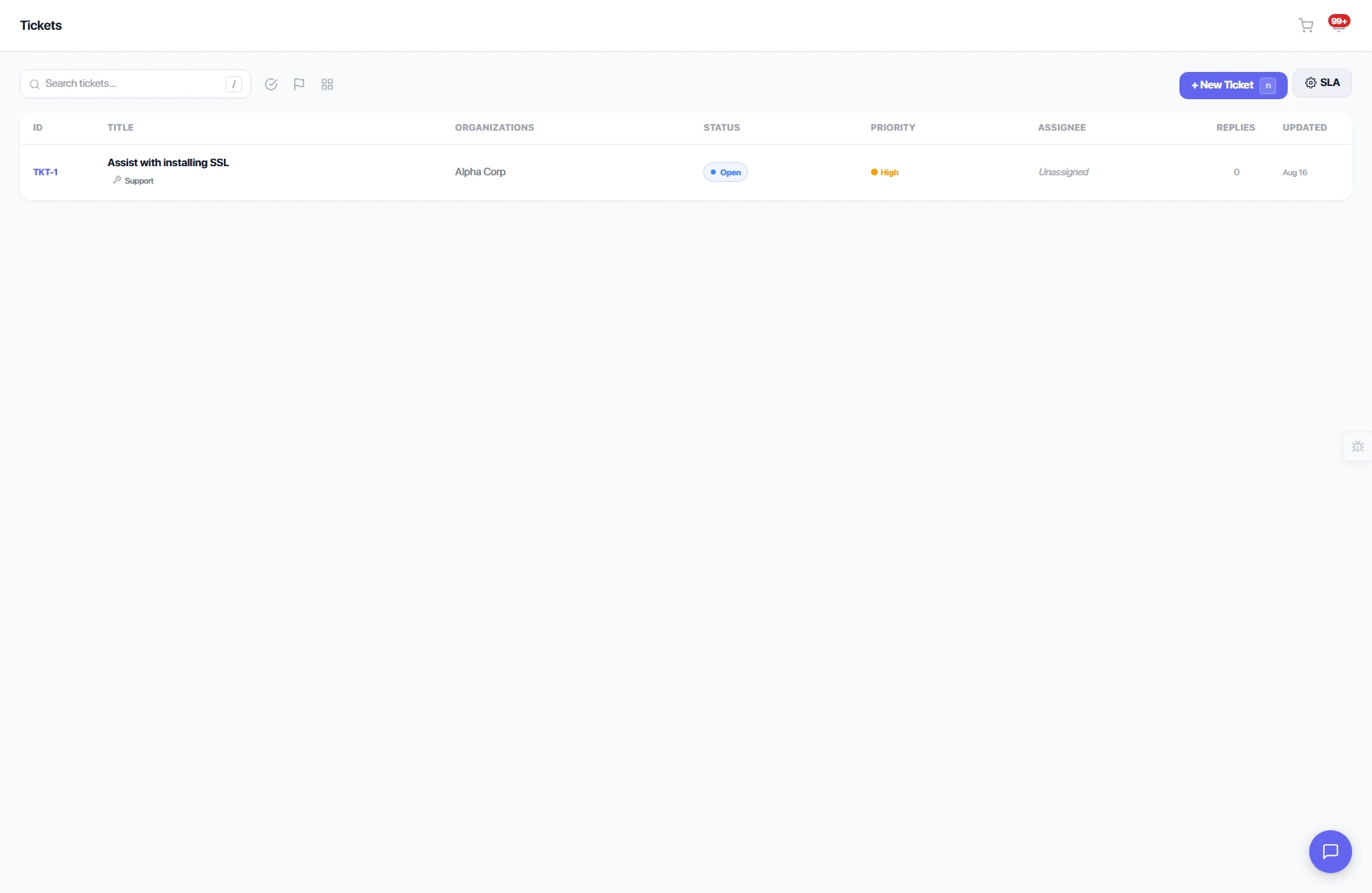
A Clear Path From Request to Resolution
Six default statuses guide every ticket through a structured workflow. Customize with your own statuses on Pro plans.
Smart SLA Computation
- Per-priority targets - set response and resolution times for each priority level
- Pause-aware - SLA clock pauses in "Waiting on Client" status automatically
- Warning at 80% - notification to assigned agent and agency owner
- Breach at 100% - escalation notification to owner and admin
- Live timer - real-time SLA countdown visible in ticket detail
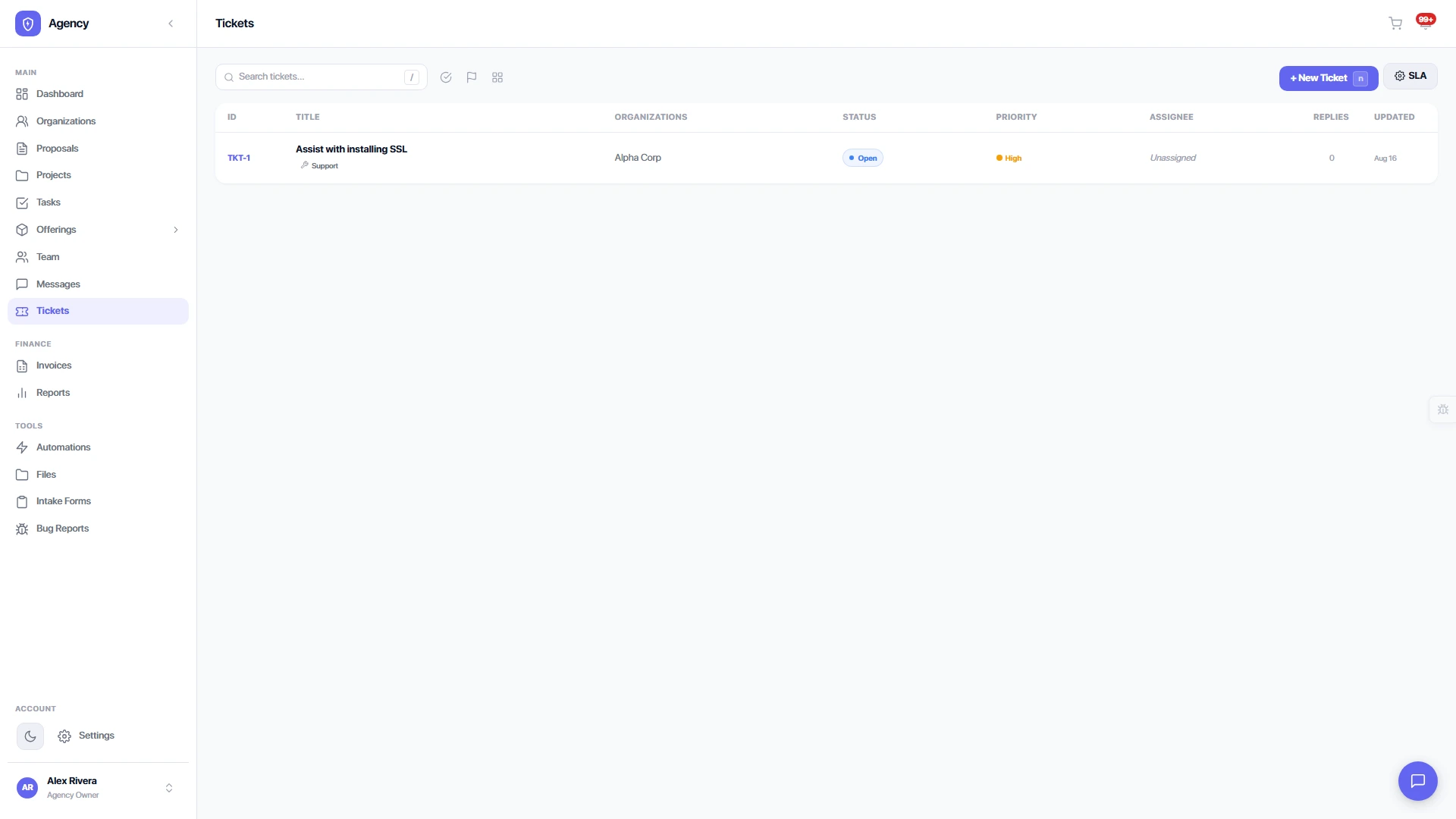
Role-Based Visibility
- Org Owner & Admin - see all tickets for their organization
- Org Member - sees only tickets they created or are watching
- Clients can reply , upload attachments , and rate resolutions
- Org Owner and Admin can reopen resolved tickets and manage watchers
- Internal notes stay hidden - clients never see your private agent discussions
CSAT Ratings Built In
- 1–5 star rating with optional text comment
- Prompted via email notification and in-app on ticket resolution
- Feeds into CRM health scoring - low CSAT signals at-risk clients
- CSAT trend charts in the Reports → Support tab
- Resolution events logged to the CRM activity timeline
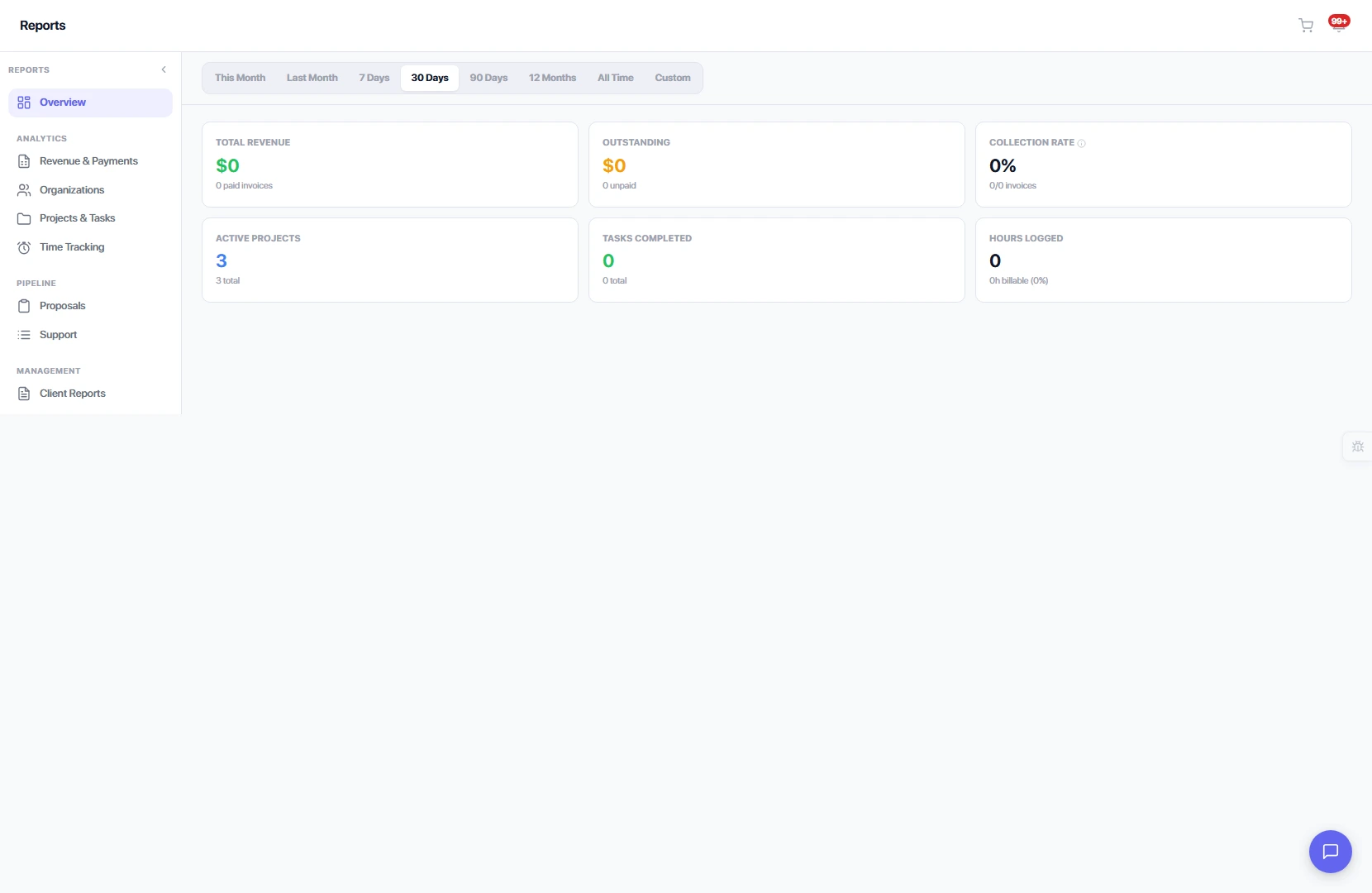
Triggers & Actions
- ticket_created - auto-assign, notify, or create a linked task
- ticket_status_changed - escalate, reassign, or send follow-ups
- ticket_assigned - welcome message to the assigned agent
- ticket_resolved - log to CRM, send CSAT prompt
- ticket_sla_breached - escalate to owner + send urgent email
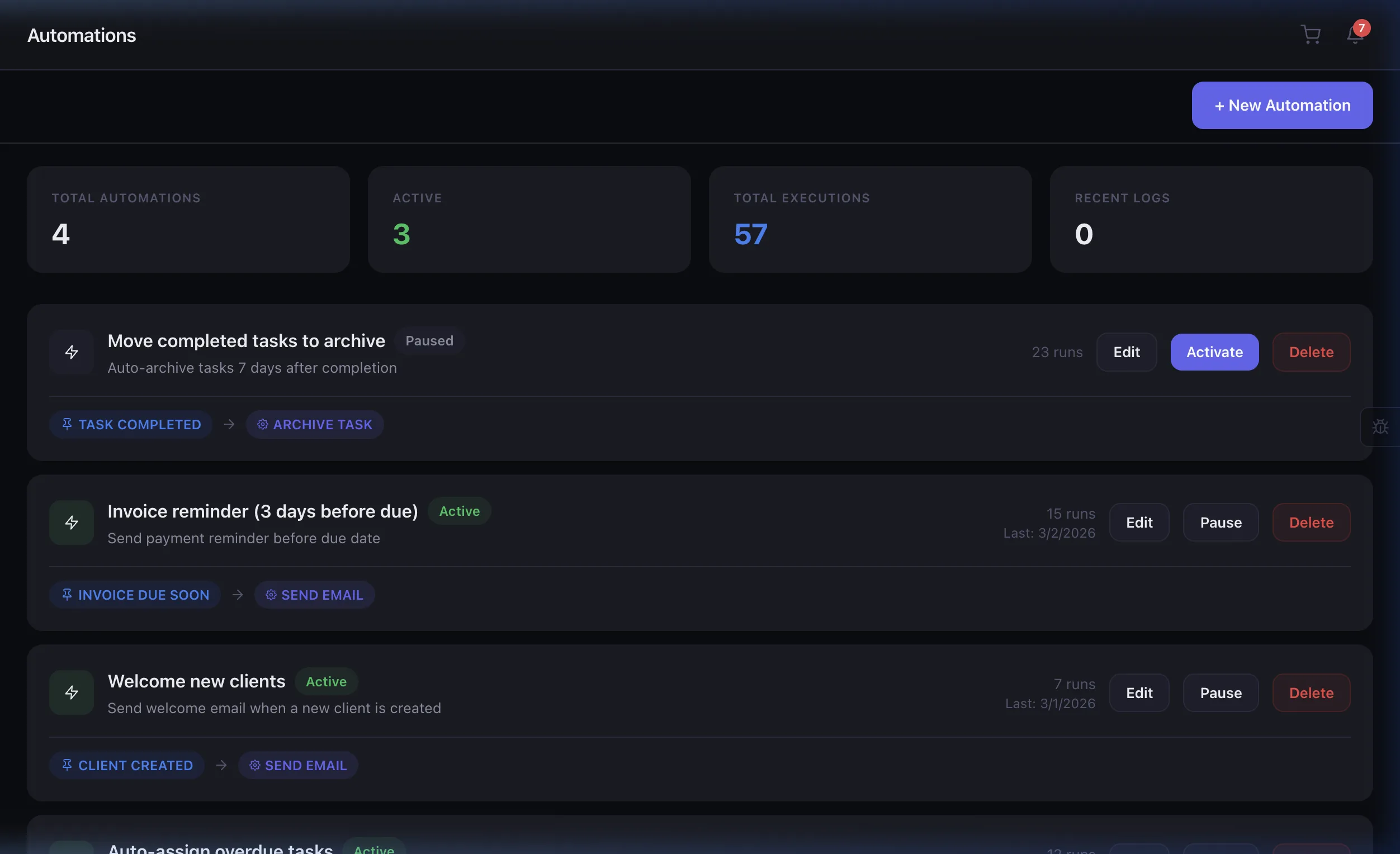
Reports & Dashboard Widgets
A dedicated Support tab in Reports with KPIs, 7 chart types, and 3 dashboard widgets - giving you complete visibility into support operations.
5 KPI Cards
Open tickets, avg first response time, avg resolution time, SLA compliance rate, and CSAT score.
7 Chart Types
Volume over time, by type, by client, resolution trend, SLA compliance, team workload, and CSAT trend.
3 Dashboard Widgets
Open tickets count, SLA breaches today, and overdue tickets - right on your executive dashboard.
Health Score Impact
Ticket data feeds into CRM health scoring - SLA breaches and low CSAT signal at-risk clients automatically.
Two Billing Pathways
- Retainer deduction - if linked to a support service, hours auto-deduct from the retainer balance
- Invoice generation - unbilled ticket time surfaces on the CRM page with a "Generate Support Invoice" button
- Separate from projects - ticket time never appears in project budget tabs
- Live timer - start/stop timer directly from the ticket detail drawer
Loved by 500+ Agencies Worldwide
Here's how Eidoncore replaces the tool stack for real agencies, every single day.
We replaced Trello, HubSpot, and QuickBooks with just Eidoncore. Having our project budgets, client CRM, and invoicing connected in one platform saved us 15+ hours every week and eliminated all context switching.

Switching from Asana, Mailchimp, and Harvest felt risky, but Eidoncore paid for itself in a month. Client reporting is now fully automated and our billing errors dropped to zero.

We were paying for Monday, Zendesk, and Xero separately and none of it talked to each other. Now every ticket, task, and invoice lives in one place - onboarding new hires takes a day, not a week.

Our team stopped fighting ClickUp, Pipedrive, and FreshBooks entirely. Eidoncore gave every project a live budget, so scope creep gets caught before it costs us money, not after.

Notion, Close, and Wave were three logins we opened every morning. Now it's one dashboard, and clients get real-time visibility into their own projects without asking us for updates.

Frequently Asked Questions
Tickets represent external support requests from your clients (bug reports, questions, change requests). Tasks represent internal work for your agency team. A ticket CAN generate a linked task when work is needed, but the two systems stay separate - tickets track the conversation and resolution, tasks track the work.
SLA targets are configurable per priority level (first response time and resolution time). The system uses an accumulator approach that pauses the SLA clock when tickets are in "Waiting on Client" status, ensuring accurate measurement of your actual response time - not wall-clock time. You'll receive warning notifications at 80% and breach alerts at 100%.
Yes. Clients can submit and track tickets from a dedicated Tickets page in the portal, a "Need Help?" floating button on every portal page, or a "Report an Issue" button on project detail pages. Organization Owners and Admins see all tickets, while Members see only tickets they created or are watching.
Core ticketing requires the Starter plan or higher (limited to 50 open tickets). SLA tracking, CSAT ratings, custom statuses, canned templates, and ticket merging are available on Pro plans (unlimited tickets). Auto-assignment rules and email-to-ticket are Enterprise features.
Yes. Time logged on tickets follows a separate billing pipeline from project time. If the ticket is linked to a support retainer (OrgService), hours auto-deduct from the balance. Otherwise, unbilled ticket time surfaces on the client's CRM page with a "Generate Support Invoice" button.